
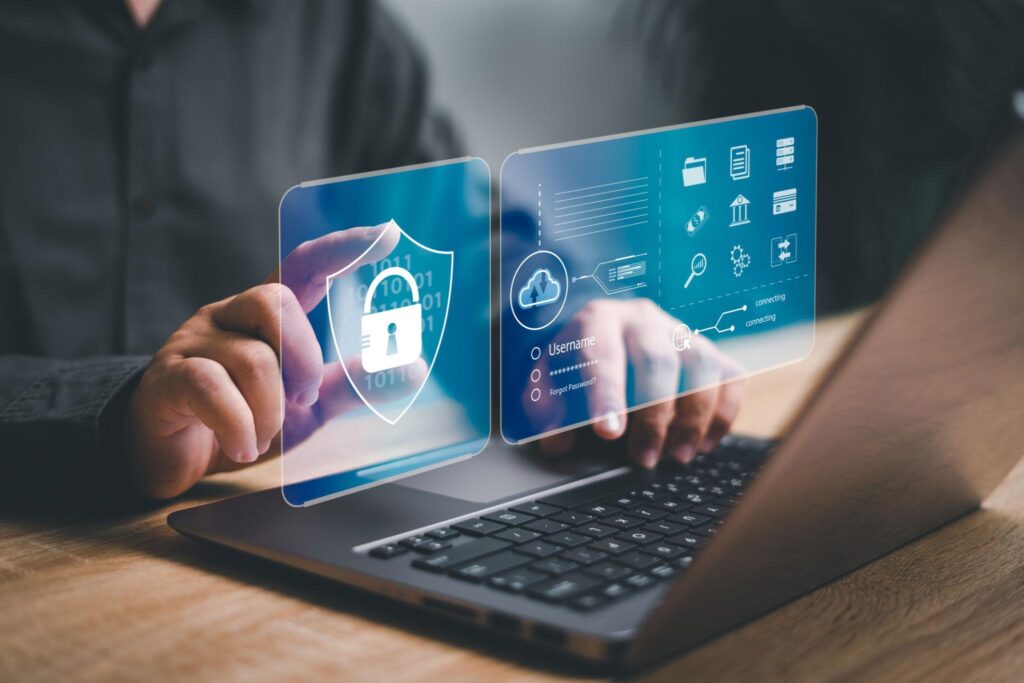
Most small business owners believe hackers only chase after big corporations. After all, why would cybercriminals waste time on a bakery, a boutique, or a growing agency? But here’s the truth: small businesses are often the first target.
According to the Small Business Cybersecurity Study conducted in 2025, nearly 50% of SMBs worldwide experienced a cyberattack in the last year. Other research highlights that attackers specifically look for businesses with fewer defences, knowing it takes less effort to break in.
However, for small businesses, the impact is heavy: downtime, lost sales, reputational damage, and in worst cases, permanent closure. Cybersecurity isn’t just an IT concern, but has become a survival strategy in 2025.
Let’s break down why small businesses need to prioritise cybersecurity, what’s at stake if you don’t, and how simple, affordable steps (backed by the right tech partners) can keep your business safe from data breaches.
The Rising Risk for Small Businesses
With the advancing technology and most of our time spent online, cyberattacks aren’t just increasing, they’re evolving to keep up. Criminals know that small businesses often don’t have the same security budgets or in-house IT teams as large corporations, which makes them a prime target.
The numbers tell the story clearly. A 2025 Mastercard study shows that 42% of SMBs faced phishing attacks last year, while 37% dealt with malware or ransomware attempts. Research from CrowdStrike also notes that attackers actively search for businesses with weaker defences, which makes SMBs the “low-hanging fruit” of the digital world.
What’s more worrying is that many small businesses underestimate the threat. A survey found that nearly 60% of small business owners still believe they are “too small” to be targeted. In reality, it’s often the opposite. Being small makes them less prepared and more vulnerable.
Every phishing email, every outdated plugin, and every unsecured Wi-Fi network is an open door for attackers. For growing businesses, one small slip could mean big consequences.
What Happens If You Don’t Prioritise Cybersecurity
Some consider the data breach in a cyberattack as the real danger. However, it’s the ripple effect that follows. For small businesses, even one incident can have lasting consequences.
First comes the financial hit. Studies show that the average cost of recovering from a ransomware attack can reach tens of thousands of dollars. For a small company, that’s enough to derail growth plans or drain cash reserves.
Then there’s the reputational damage. Customers today expect their data to be safe, and two out of three people say they’re less likely to do business with a company after a breach. Losing trust often hurts more than losing money.
Operational disruption is another overlooked risk. A single phishing email can compromise accounts, lock employees out of critical systems, or wipe out important files.
For some small businesses, the downtime is so severe that recovery never happens. In fact, a large percentage of SMBs shut down within six months of a major attack. If you don’t prioritise or ignore cybersecurity, only your systems aren’t at risk, but it puts your entire business on the line.
Key Vulnerabilities & Entry Points
Most cyberattacks don’t start with complicated hacking. They start with small gaps in everyday business operations. For small businesses, these weak spots are often easy to overlook and an opportunity to grab for hackers.
Here are some of the most common vulnerabilities:
- Outdated software and plugins – Skipping updates leaves doors wide open for attackers. (This connects to how unreliable developers often neglect regular maintenance. See our blog on Spotting Unreliable Developers for more.)
- Weak or reused passwords – A simple password crack can give criminals full access to emails, bank accounts, or customer records.
- Human error – Employees clicking on phishing emails or sharing sensitive data without caution.
- Third-party risks – Vendors, freelancers, or partners with poor security practices can expose your systems. (This is where outsourcing to a reliable, security-first team saves headaches. See our blog on Outsourcing Web Projects.)
- Unsecured remote work setups – Personal devices and home Wi-Fi often don’t have the same protections as office systems.
- No incident response plan – Without a clear “what to do if hacked” process, businesses lose precious time during an attack.
Identifying these weak spots early is the first step toward building a stronger digital foundation. And when businesses invest in secure, scalable systems, they’re not only protecting data, they’re protecting and investing in their future. (Learn more in our blog on Scalable Websites for Growing Businesses).
Simple (But Powerful) Protection Measures
Cybersecurity might sound complex, but the basics are straightforward. Even a little insight is enough to block most common attacks. For small businesses, it’s about building good habits and setting up systems that scale with growth.
Here are some operations and tasks that, when performed regularly, can create a safe and secure space for your online world.
Run Regular Security Audits
Think of audits as health checkups for your digital presence. They uncover hidden vulnerabilities in your website, hosting, or plugins before attackers do. Many issues only come to light during a redesign or technical upgrade. (See our blog on How We Approach Website Redesigns for a deeper look at this process.)
Keep Everything Updated
Software, CMS platforms, and third-party plugins need constant updating. Hackers often exploit outdated tools because they’re easy entry points. Turning on auto-updates for critical tools and scheduling regular reviews can reduce this risk drastically.
Train Your Team
The human factor is still the weakest link in cybersecurity. Employees should know how to identify phishing emails, spot suspicious links, and report potential threats. Even a short training session every few months can cut risks significantly.
H3: Use Strong Access Controls
Not every employee needs access to every file. Limiting permissions ensures that if one account is compromised, the damage is contained. Add two-factor authentication to critical system operations. It’s a simple step that creates a strong barrier.
Backups and Encryption
Data is the lifeblood of any business. Regular backups ensure you can recover quickly after an attack (which is quite hard for small businesses). Encryption adds an extra layer of protection, keeping sensitive information safe even if it falls into the wrong hands.
Work with Reliable Developers
Unreliable developers often skip security best practices, leaving businesses exposed. From weak coding practices to neglecting updates, these shortcuts become your risk. (Read our blog on Spotting Unreliable Developers to learn what red flags to watch for.)
Consider Outsourcing for Peace of Mind
Cybersecurity doesn’t have to overwhelm your in-house team. Outsourcing to a security-aware agency ensures you get expert support while freeing up time for your business priorities. (See our blog on Outsourcing Web Projects for how it can save both time and money.)
Cybersecurity may sound like something that needs spending big. But actually, it’s about making consistent, smart choices. With the right mix of proactive steps and trusted partners, small businesses can build digital resilience without overwhelming their budgets.
The Role of Cyber Insurance
Do you want to add something to your digital presence that can give you a sense of relief? Think about cyber insurance. Even with strong protections in place, no business is ever 100% risk-free. That’s where cyber insurance comes in. It helps cover costs if your business suffers a data breach, ransomware attack, or other cyber incident.
For small businesses, this can mean help with recovery expenses, legal fees, or even customer notifications after an incident. But it’s important to see insurance as a safety net, not the first line of defence. Without basic protections like audits, backups, and secure development, insurers may not even cover your claim.
Think of it this way: as car insurance doesn’t prevent accidents, cyber insurance doesn’t stop attacks. It simply helps you recover faster when something goes wrong.
How Modalys Helps You Secure Your Website & Digital Presence
At Modalys, we see cybersecurity as more than an add-on. It’s built into the way we design and maintain websites. A beautiful website that isn’t secure won’t serve your business in the long run. That’s why every project we handle includes a strong focus on safety and reliability.
- Secure Website Development – Clean, reliable code built with best practices, reducing vulnerabilities from day one.
- Vulnerability Scans & Code Audits – Regular checks to catch weak points before attackers find them.
- Ongoing Maintenance & Updates – Keeping plugins, software, and systems patched so you’re never running on outdated tools.
- Data Protection – Encryption and secure backups to safeguard sensitive information.
- Scalable Infrastructure – Websites designed to grow without breaking, both in performance and in security. (See our blog on scalable websites for more.)
- Trusted Outsourcing Support – Agencies and businesses can lean on Modalys for projects that need a secure, reliable development partner. (More in our blog on outsourcing web projects.)
Conclusion and CTA
Small businesses face the same cyber risks as large corporations. The difference is that the impact hits harder when resources are limited. One attack can cause downtime, shake customer trust, or stall growth.
The good news is that most threats can be prevented with simple, consistent steps. The stronger the digital foundation, the easier it becomes to scale, innovate, and serve your customers with confidence.
At Modalys, we make security part of every project. Not an afterthought. If you’re ready to strengthen your website, protect your data, and prepare your business for growth, let’s start building that future together.
Resources:
https://www.cybersecuritydistrict.com/why-cybersecurity-is-essential-for-small-businesses/
https://www.pioneerny.com/financial-education/business/building-your-business/why-cybersecurity-should-be-top-priority-for-your-business
https://www.crowdstrike.com/wp-content/uploads/2024/09/crowdstrike-small-business-solution-brief.pdf